

Madinah is one of the most sacred cities in Islam and holds a special place in the hearts of Muslims worldwide. It was the city where the Prophet Muhammad ﷺ migrated, established the Muslim community, and spent the final years of his life. For pilgrims performing Umrah, visiting Madinah provides an opportunity to pray, learn about Islamic history, and reflect on the sacrifices made by the early Muslims.
If you are planning your pilgrimage from the United States, it is worth arranging your itinerary carefully so you have enough time to explore the city. When comparing Umrah packages from USA, check whether your package includes accommodation and transport in Madinah, as well as enough time for Ziyarat and worship at the city’s important Islamic sites.
What Is Ziyarat in Madinah?
“Ziyarat” means visiting places of religious, historical, or spiritual significance. During an Umrah trip, pilgrims commonly visit important locations associated with the life of the Prophet ﷺ, his Companions, and significant events in early Islamic history.
Ziyarat is not a separate obligatory ritual of Umrah. Rather, it is an opportunity to learn about Islamic history and remember the people and events connected with these sacred places.
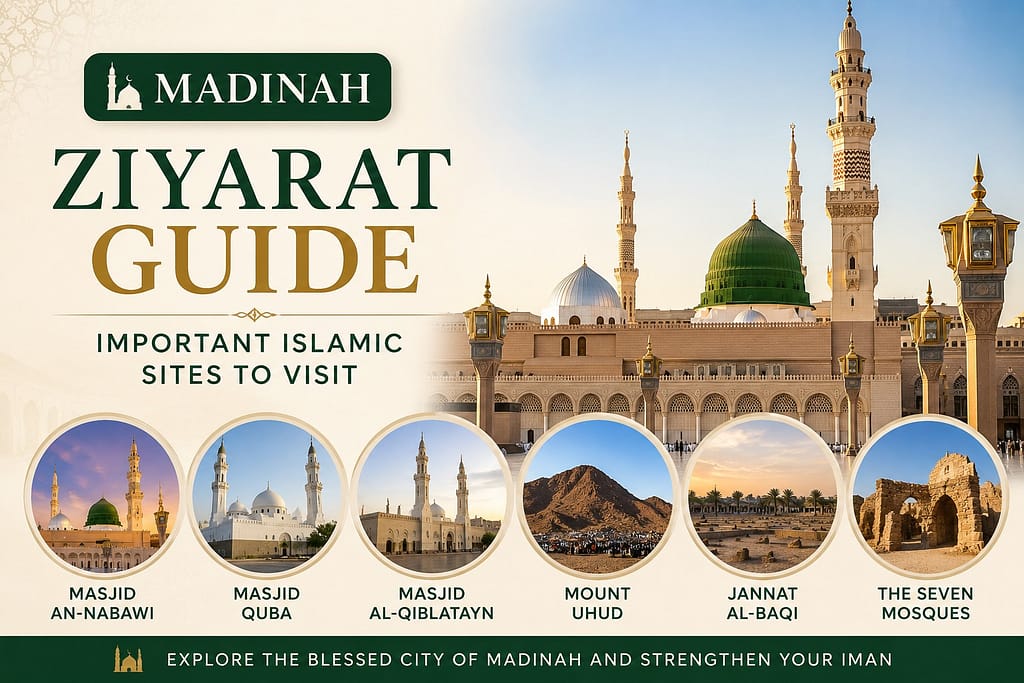
1. Masjid an-Nabawi
Masjid an-Nabawi, the Prophet’s Mosque, should be at the top of every Madinah Ziyarat itinerary.
The mosque was established by the Prophet ﷺ after his migration to Madinah and is one of the three mosques that Muslims are encouraged to travel specifically to visit.
The Prophet ﷺ said that a prayer in his mosque is better than a thousand prayers elsewhere, except for Masjid al-Haram.
Visitors should maintain respect and tranquillity inside the mosque. Spend time praying, reading the Quran, making Dhikr, and sending blessings upon the Prophet ﷺ.
Visiting the Prophet’s ﷺ Grave
The Prophet ﷺ is buried in the chamber adjacent to his mosque. Visitors may offer Salam to the Prophet ﷺ and then to Abu Bakr and Umar (may Allah be pleased with them).
When visiting, maintain good manners and avoid pushing, shouting, or engaging in practices that are not part of the prescribed worship.
2. Rawdah
Rawdah is the blessed area between the Prophet’s ﷺ house and his pulpit (minbar). The Prophet ﷺ described it as one of the gardens of Paradise.
Many pilgrims hope to pray in Rawdah during their visit to Madinah.
Access is organised and controlled, and visitors should follow the current booking and entry arrangements provided by the Saudi authorities. Do not push or rush when entering or leaving.
3. Masjid Quba
Masjid Quba has an important place in Islamic history. It was established by the Prophet ﷺ after his arrival in the area of Quba during the migration to Madinah.
The Prophet ﷺ regularly visited Masjid Quba, and authentic narrations mention the virtue of performing purification and then praying there.
A well-known hadith reports that whoever purifies himself at home and then goes to Quba Mosque and prays there receives a reward like that of Umrah.
For this reason, Masjid Quba is one of the most popular stops on a Madinah Ziyarat tour.
4. Masjid al-Qiblatayn
Masjid al-Qiblatayn, meaning “Mosque of the Two Qiblahs,” is associated with the event when the direction of prayer was changed from Jerusalem towards the Kaaba in Makkah.
The change of Qiblah was a significant moment in Islamic history and is mentioned in the Quran in Surah Al-Baqarah, verses 142–150.
Visiting this mosque gives pilgrims an opportunity to learn more about the development of the Muslim community during the Prophet’s ﷺ time in Madinah.
5. Mount Uhud
Mount Uhud is one of the most historically significant locations in Madinah.
The area is associated with the Battle of Uhud, which took place in 3 AH. The battle was a major event in the early history of Islam and involved the Prophet ﷺ and his Companions.
The Prophet ﷺ loved Uhud, and an authentic hadith states that Uhud is a mountain that loves Muslims and is loved by them.
Pilgrims commonly visit the area to reflect on the lessons of Uhud, including patience, obedience, sacrifice, and steadfastness.
6. Uhud Martyrs Cemetery
Near Mount Uhud is the burial place of several Companions who were martyred during the Battle of Uhud.
Among them was Hamzah ibn Abdul-Muttalib (RA), the uncle of the Prophet ﷺ.
Visitors can remember the sacrifices of the Companions and make Dua for those who passed away. When visiting graves, Muslims should follow the established Islamic etiquette and avoid asking the deceased for help or making acts of worship directed toward them.
7. Jannat al-Baqi
Jannat al-Baqi, also known as Al-Baqi Cemetery, is located near Masjid an-Nabawi.
Many Companions and members of the Prophet’s ﷺ family are buried there. Among those associated with Al-Baqi are Uthman ibn Affan (RA), several wives of the Prophet ﷺ, and other members of the early Muslim community.
When visiting a Muslim cemetery, pilgrims can offer the prescribed greeting and make Dua for those buried there.
A commonly recited greeting is:
“Peace be upon you, inhabitants of the believing people. We will, if Allah wills, join you.”
The visit should be peaceful and respectful.
8. The Seven Mosques
The area commonly known as the Seven Mosques is associated with the location of the Battle of the Trench (Ghazwat al-Khandaq).
The site is located around the area where defensive preparations were made during the battle.
One of the best-known mosques in this area is Masjid al-Fath. The surrounding area provides an opportunity to learn about the Battle of the Trench and the challenges faced by the early Muslim community.
It is worth noting that the exact number and historical identification of the small mosques at this location can vary in popular descriptions. Therefore, pilgrims should focus on the historical significance of the area rather than assuming that visiting each small mosque carries a particular religious reward.
9. Masjid al-Ghamamah
Masjid al-Ghamamah is located close to Masjid an-Nabawi and is associated with places where the Prophet ﷺ performed Eid and rain prayers.
The mosque is sometimes included in local Madinah Ziyarat tours because of its connection with the Prophet’s ﷺ life and the history of the city.
If you visit, take the opportunity to learn about the events associated with the location rather than treating the visit itself as an obligatory part of Umrah.
10. Masjid Abu Bakr
Masjid Abu Bakr is another historic mosque in the area around Masjid an-Nabawi. It is traditionally associated with Abu Bakr al-Siddiq (RA) and the location of Eid prayer.
It is often visited together with other historical mosques around the Prophet’s Mosque.
Why Should You Visit These Islamic Sites?
Madinah Ziyarat is more than sightseeing. Each location can help pilgrims understand an important part of Islamic history.
Visiting these places can help you:
- Learn about the life of the Prophet ﷺ.
- Understand the sacrifices of the Companions.
- Reflect on important events in Islamic history.
- Increase your appreciation for the early Muslim community.
- Connect historical events with lessons from the Quran and Sunnah.
- Spend meaningful time in Madinah beyond the daily prayers.
Best Time for Madinah Ziyarat
The best time for outdoor Ziyarat generally depends on the season and weather.
During hotter months, early morning can be more comfortable than the middle of the day. In cooler months, daytime visits are usually easier for many travellers.
If you are travelling with elderly family members or young children, avoid unnecessarily long outdoor visits during extreme heat.
Your hotel location also matters. Staying closer to Masjid an-Nabawi can make it easier to attend prayers without spending too much time travelling.
Madinah Ziyarat Tips for Pilgrims
1. Follow Saudi Regulations
Entry arrangements and visiting procedures can change. Always follow the latest instructions from Saudi authorities and mosque officials.
2. Dress Modestly
Wear appropriate, modest clothing when visiting mosques and other religious sites.
3. Respect the Sacred Places
Avoid shouting, pushing, littering, or blocking entrances and walkways.
4. Don’t Treat Ziyarat as an Obligation
Visiting historical sites in Madinah is not a required part of Umrah. Your primary focus should remain on your obligatory acts of worship.
5. Learn the History Before Visiting
Reading about the Battle of Uhud, the Hijrah, the Battle of the Trench, and the life of the Prophet ﷺ can make your visits much more meaningful.
6. Carry Water
Madinah can become hot, especially during summer. Keep yourself hydrated and take appropriate precautions.
7. Allow Enough Time for Salah
Do not let sightseeing cause you to miss an obligatory prayer. Plan your Ziyarat around the five daily prayers.
How Many Days Do You Need in Madinah?
There is no fixed number of days required for a Madinah visit. Some pilgrims stay for two or three days, while others spend a week or longer.
If possible, allow enough time to pray regularly in Masjid an-Nabawi, visit important Ziyarat locations without rushing, and have periods of rest.
A slower itinerary is often more enjoyable than trying to visit every location in one day.
Madinah Ziyarat for Families
Families travelling with children should keep the itinerary simple. Young children may become tired during long visits, particularly in hot weather.
Choose fewer locations and allow breaks between visits. Elderly family members may also benefit from shorter journeys and comfortable transport.
The aim should be to make the experience educational and spiritually meaningful rather than exhausting.
Planning Your Umrah and Madinah Visit
When planning your Umrah, consider how many nights you want to spend in Makkah and Madinah. Your accommodation location, transport arrangements, flight schedule, and Ziyarat plans can all affect your overall experience.
If you are travelling with a group, check whether your travel provider offers guided Madinah Ziyarat and whether transport to the main Islamic sites is included.
For pilgrims considering a travel provider, Bismillah Tours can be explored as an option when comparing Umrah travel arrangements and services. Before booking, carefully review the package inclusions, accommodation details, transport arrangements, visa requirements, and cancellation terms.
Final Thoughts
Madinah is a city filled with Islamic history and spiritual significance. From Masjid an-Nabawi and Rawdah to Masjid Quba, Mount Uhud, Jannat al-Baqi, and the sites associated with the Battle of the Trench, each location offers an opportunity to learn and reflect.
Remember that Madinah Ziyarat is not an obligatory part of Umrah. Approach these visits with respect, learn the authentic history behind them, and keep your primary focus on Salah, Dhikr, Quran recitation, and sincere worship.
May Allah accept the Umrah and good deeds of every pilgrim, make their journey easy, and allow them to return home with increased faith and beneficial memories. Ameen.